Friday, January 29, 2010

Inquiry Circles

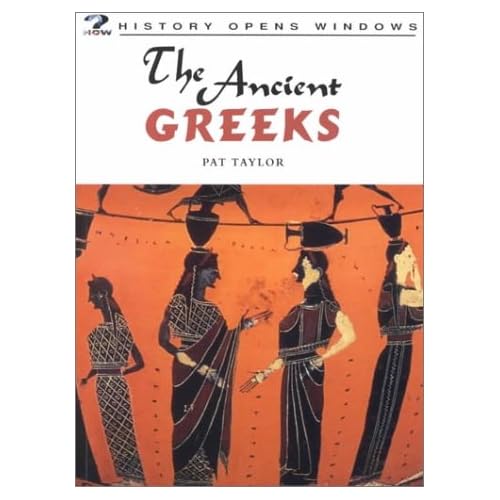
For the past two weeks, we have been learning about ancient Greece through our work with Inquiry Circles. Each Inquiry Circle (group) focused their conversation on a different non-fiction ancient Greece text that they voted on. Group members decided ahead of time what topics they'd like to discuss, what pages to read for homework, marked their thinking using sticky notes, and discussed the text in school. This process required a great deal of responsibility! Our aim was to keep the conversation about the text going for 10 minutes. Many of the groups could have kept the conversation going even longer. Afterwards each group member rated the conversation on a 1-5 scale. This self-reflection helped us think about how to improve the conversation for the next meeting.

Each group tried to connect their small conversation to one of the BIG Questions that will guide our investigation of ancient Greece:
  • 1. How did the location of ancient Greece affect how people lived?
  • 2. What do you need to have a successful civilization? What is most important? (clothing, food, shelter, water, leaders, rules, government, religion, military in case of war (protection),  education, theatre, art, buildings/architecture, sports, music, medicine, money
  • 3. Was the Ancient Greece civilization fair to all its members?
  • 4. How were decisions made? Who had the power?
  • 5. What are some of the connections between ancient Greece and our lives?
Here are the are different books that groups worked with:


Tuesday, January 26, 2010

Choosing a location for a civilization

Where would you have built an ancient civilization? How did location affect civilizations in positive and negative ways? Were there certain geographic features that made it easier for a civilization to survive and thrive? These are just some of the big questions we thought about before beginning our exploration of ancient Greece, Rome, and Mali. Students studied ancient Egypt and China last year, so that provided us with some basic background knowledge. Below is a list that we brainstormed together. Did we leave something out? Do you agree? Let us know what you think.

Our Ideas
Things to consider when choosing the location for a civilization:
  • River, lakes (provide water)
  • Weather, climate
  • Earthquakes & fault lines
  • Natural disasters
  • Type of vegetation/crops that can grow
  • Mountains (Fresh water? Dangerous? Snow)
  • Ocean (Tsunami, fish, ships/trading, hurricanes)
  • Are there natural supplies to build shelters?
  • Where will the food come from?
  • How will supplies reach you?

Thursday, January 21, 2010

The Fantastic World of Compasses

Today in PE we learned how compasses process. The needles point to different areas. The compass has 360 degrees on it and works by the magnetic force field around the earth which always pulls the red needle north and the white needle south. A few ways to remember the directions are: Never Eat Soggy Waffles, Never Eat Sour Watermelon, and Never Eat Shredded Wheat. We used the degrees on the compasses to find different areas in the gym. Mr. Flint said, "You were the most quality class with the compasses - even better than my 4th and 5th graders."

Friday, January 15, 2010

Factors


On Wednesday's Morning Message, which students read when they first arrive in the morning, I explained that we would be exploring the concept of "factors" in math later that day. Caleb, Henry, and Anna Grace were curious about factors chose to start investigating factors even before math began. They started by finding the factors of 100 and moved on to 64. Here is their work:


During math we read the book One Hundred Hungry Ants, which tells the story of 100 ants who need to get to the food faster and try all different arrangements to make their lines shorter. They begin with 1 line of 100 and finally make 10 lines of 10, only to find the picnic is already over. Afterwards, students chose their own number of ants to explore. Some students chose 12 ants while others took on more challenging numbers like 120, 1,000, and even 10,000 ants.


Multiplication and Liam's Goats


The task:
Liam has 36 goats on his farm. He grew up hearing the all the fairy tales about the “big, bad Wolf” so he’s worried about a wolf attacking his goats at night. A fenced in pen area seems to be the best idea. He’s already growing corn on most of his farm and the grazing land is hilly, which only leaves a small area for the goat pens. You can see the space below that he has to build on:

Liam wants to find all the possible ways to break up the goats into equal areas. For each solution he wants there to be the same number of goats in each pen, otherwise the goats will get jealous. Record your solutions for Liam using words, pictures, and number sentences (hopefully multiplication).


Just a few of our ideas (we're still working):


Which Podcast do you want to watch?


On Thursday we went to the computer lab to create the titles for our nature trail Podcasts. We explored fonts, alignment, and resizing the text. After working as graphic designers to get the words looking exactly the way we wanted, we moved over the Art Studio to add color, borders, and sketches.


Friday, January 8, 2010

The New Mac Lab


Our old Dell computer lab was crowded with wires going every which way and big monitors. Sometimes kids would accidentally pull a wire and the computers would shut off. Now everything is organized. The new Macintosh laptops are white and the lab was setup right before Winter Break. Our first week back to school we met with Mr. Johnson and Ms. Harding to get an introduction to the computers and lab. We each have to log in using our lunch number. This is our password and username. We do not use accessory mice, instead we just use the touch pad on the computer. This is how you move around the screen and click. The whole lab looks and feels lighter now that the computers are white instead of black. The room seems bigger too - without all those big desktop Dell computers.