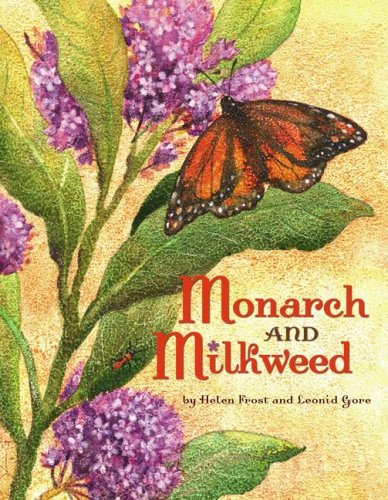
On Tuesday we read the book, Monarch and Milkweed by Helen Frost and Leonid Gore. We looked at the first two pages of the book with the words covered. We tried to imagine how Helen and Leonid may have started the story knowing that the lead is one of the most important parts of a story. It should grab the reader's attention and make them want to read on. In writing our podcasts we have also talked a lot about the delicate balance between informing and entertaining. An author who we think does a masterful job at this is Byrd Baylor. We may need to add Helen and Leonid to our list too!
Below you will see the first two pages of the book. On each page the words were covered up, but students were given the 3-4 informative words that the authors had included. After we shared our writing, we felt like maybe we came up with some better ideas than even the authors. What do you think?
Actual lead:
"In a patch of dirt behind an old red barn, Milkweed stretches into warm spring air. Its roots reach deep and wide, its stem points to the sky."
Our Ideas: (Remember, we didn't read the published lead until after writing!)
The Milkweed rests in the spring air. The stem emerges into the world, and the roots awake with joy.
The Milkweed roots burst out of sleeping into the Spring air.
The Milkweed roots blast the stem up out of the ground into the warm fresh Spring air.
Up on a spring hill, my stem holds high. The roots deep in the floor hold the Milkweed strong and sturdy.
Milkweed feeds Monarch late in Spring. Their roots suck glistening water and feed the stem.
A single Milkweed curls its roots down into the brown wormy soil. Slowly, slowly, the stem up up into the wide open air. Brining a new life into the big open green world.

Actual second page text:
"Monarch spreads her wings and rides the wind -- past white and yellow daisies, across a creek, heading north."
Our Ideas:
An orange cloud of Monarchs fly north on silent silky wings.
Monarchs' golden wings glow in the whistling wind as they float on air northward bound.
Monarchs' wings pound the velvety black sky.
My wings hold me in the breeze when I fly north with my Monarch family.
Up above the daisy hills, I fly tipping my wings in the rushing creek.
The Monarchs' wings pound hard like a dash of air, the graceful Monarch struck its wings fast to get to the north.
A Monarch soars above, and peers down, to find a bath of daffodils.




 Last week we worked in groups to write speeches for this food drive. Like any good piece of writing, we made sure that we included a good lead or attention grabber, the body of the speech with important details for the audience, and a closing which reminded the audience of the purpose. Will, Caleb, and Clare's speech is on the right. Monday morning we went to our assigned classrooms and presented our speeches. This took a lot of practice! Each group also prepared a bar graph to put outside their classroom to record the number of food items their classroom brings in each day.


