Thursday, December 3, 2009

Writing leads


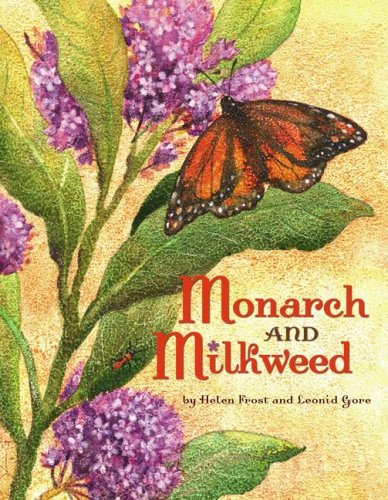
On Tuesday we read the book, Monarch and Milkweed  by Helen Frost and Leonid Gore. We looked at the first two pages of the book with the words covered. We tried to imagine how Helen and Leonid may have started the story knowing that the lead is one of the most important parts of a story. It should grab the reader's attention and make them want to read on. In writing our podcasts we have also talked a lot about the delicate balance between informing and entertaining. An author who we think does a masterful job at this is Byrd Baylor. We may need to add Helen and Leonid to our list too!

Below you will see the first two pages of the book. On each page the words were covered up, but students were given the 3-4 informative words that the authors had included. After we shared our writing, we felt like maybe we came up with some better ideas than even the authors. What do you think?


Actual lead:
"In a patch of dirt behind an old red barn, Milkweed stretches into warm spring air. Its roots reach deep and wide, its stem points to the sky."

Our Ideas: (Remember, we didn't read the published lead until after writing!)

The Milkweed rests in the spring air. The stem emerges into the world, and the roots awake with joy.

The Milkweed roots burst out of sleeping into the Spring air.

The Milkweed roots blast the stem up out of the ground into the warm fresh Spring air.

Up on a spring hill, my stem holds high. The roots deep in the floor hold the Milkweed strong and sturdy.

Milkweed feeds Monarch late in Spring. Their roots suck glistening water and feed the stem.

A single Milkweed curls its roots down into the brown wormy soil. Slowly, slowly, the stem up up into the wide open air. Brining a new life into the big open green world.


Actual second page text:
"Monarch spreads her wings and rides the wind -- past white and yellow daisies, across a creek, heading north."

Our Ideas:
An orange cloud of Monarchs fly north on silent silky wings.

Monarchs' golden wings glow in the whistling wind as they float on air northward bound.

Monarchs' wings pound the velvety black sky.

My wings hold me in the breeze when I fly north with my Monarch family.

Up above the daisy hills, I fly tipping my wings in the rushing creek.

The Monarchs' wings pound hard like a dash of air, the graceful Monarch struck its wings fast to get to the north.

A Monarch soars above, and peers down, to find a bath of daffodils.

Third Grade Food Drive


The Stony Point Third Grade has a tradition of coordinating the Stony Point School Food Drive.  In each third grade classroom, students have been assigned to five different groups.  Each group is responsible for coordinating the food drive of a specific classroom in the school, grades K – 5. The classrooms we are responsible for are Ms. Frazier, Ms. May, Ms. Payne, Ms. Amatucci, and Mr. Wells. 

Last week we worked in groups to write speeches for this food drive.  Like any good piece of writing, we made sure that we included a good lead or attention grabber, the body of the speech with important details for the audience, and a closing which reminded the audience of the purpose. Will, Caleb, and Clare's speech is on the right. Monday morning we went to our assigned classrooms and presented our speeches. This took a lot of practice!  Each group also prepared a bar graph to put outside their classroom to record the number of food items their classroom brings in each day.

Each day during the food drive, we go with our groups to collect food items and record the day’s total on their classroom's bar graph.  We return to class and record each day’s data on their own graphs in our Math Notebooks. We also keep a chart of the types of foods that we collect using tally marks.  

After recording our data in two different graphs each day we sort the food items and take them to the main collection site outside of the library.  


Graphics


We learned that one way authors and illustrators teach readers in non-fiction texts is through the use of graphics. After viewing some examples of graphics and identifying the important features, we tried to create our own graphics that would teach others the new information we just learned about soil. Our goal was to include the layers of soil, decomposers, and animals that impact the soil. Some of us even tried to create three-dimensional graphics. Take a look at Carly's graphic:


Studying Soil


A few weeks ago we studied soil as part of our ongoing research into our own Rocky Run Nature Trail. Each of us filled up a small bag with soil from around where we live. We were surprised to see how different everyone's soil looked even though we all live pretty close together.

Just like scientists, we observed different samples of soil using magnifying glasses and recorded our notes. You can see Carly's notes below about Charlie's soil:


We were amazed to find living things in our soil! Worms, beetles, ants, etc. We later found out that many of these creatures are decomposers that help break down living things into soil. Using the words organic and inorganic we classified all the things we discovered.


Making bar graphs for the Food Drive

Learn how to make a bar graph using this Jing:
Click this!

Want to try making your own graphs at home? Here's a easy website:
http://nces.ed.gov/nceskids/createagraph/

Wednesday, November 11, 2009

Sumerians

The Sumerians were one of the first to use numerals, or signs to represent abstract numbers. Around 3000 BC, six signs were created. They always put the largest amount on the left and then went in decreasing order.


On Wednesday we experimented with their number system. We tried creating the numbers listed below. Sometimes we found out there was actually more than one way to create the number.
At first we tired: 26, 78, 131, 194, 245, 620
More challenging numbers: 826, 1,313, 2,450, 3,912, 7,920, 39,709


New book!


What a cool "new" book (at least new to us). It's a mixture of math, Alice in Wonderland, and The Phantom Tollbooth. 

Book flap:
"In twelve dreams, Robert, a boy who hates math, meets a Number Devil, who leads him to discover the amazing world of numbers: infinite numbers, prime numbers, Fibonacci numbers, numbers that magically appear in triangles, and numbers that expand without . As we dream with him, we are taken further and further into mathematical theory, where ideas eventually take flight, until everyone-from those who fumble over fractions to those who solve complex equations in their heads-winds up marveling at what numbers can do."


In just the last few days we have learned about the importance of the number zero, how our number system is based on the position of the digits (unlike the Romans), and how numbers can be made infinitely small or large simply by adding or subtracting one.